

Stabilized Soil Produced By Soil Remediation Equipment Applied in Subgrade Filling
Stabilized soil subgrade filling technology focuses on high-water-content soil sources, leveraging soil stabilization equipment to streamline pre-treatment and mixing workflows. It reduces moisture content and breaks down soil through measures like adding gel-breaking dehydrating agents and turning/sunning. After the curing period, the pre-treated mixture is crushed by a grinder and then uniformly blended with curing agents and stabilizers in specialized mixing equipment to produce stabilized soil. This approach not only boosts soil source utilization but also significantly elevates the subgrade's bearing capacity and stability.
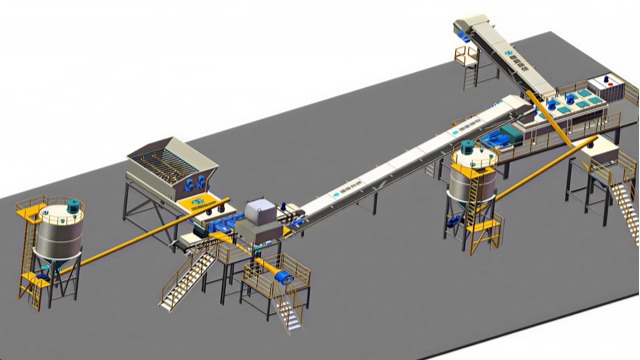
Ninon soil stabilization equipment
Construction Process of Soil Remediation Equipment
1. Dehydration of Undisturbed Sludge
By integrating the independently developed gel-breaking dehydrating agent from Zhongneng Lüwan into the sludge, soil remediation equipment rapidly disrupts the sludge's water-bubble structure, separating free water and interstitial water. The treated material transforms into stabilized soil, free of organic pollutants, decomposition, fermentation, and odor. Through gel-breaking stabilization, ionic heavy metals are immobilized within the soil's molecular structure, achieving sludge stabilization and harmless treatment without secondary environmental pollution.
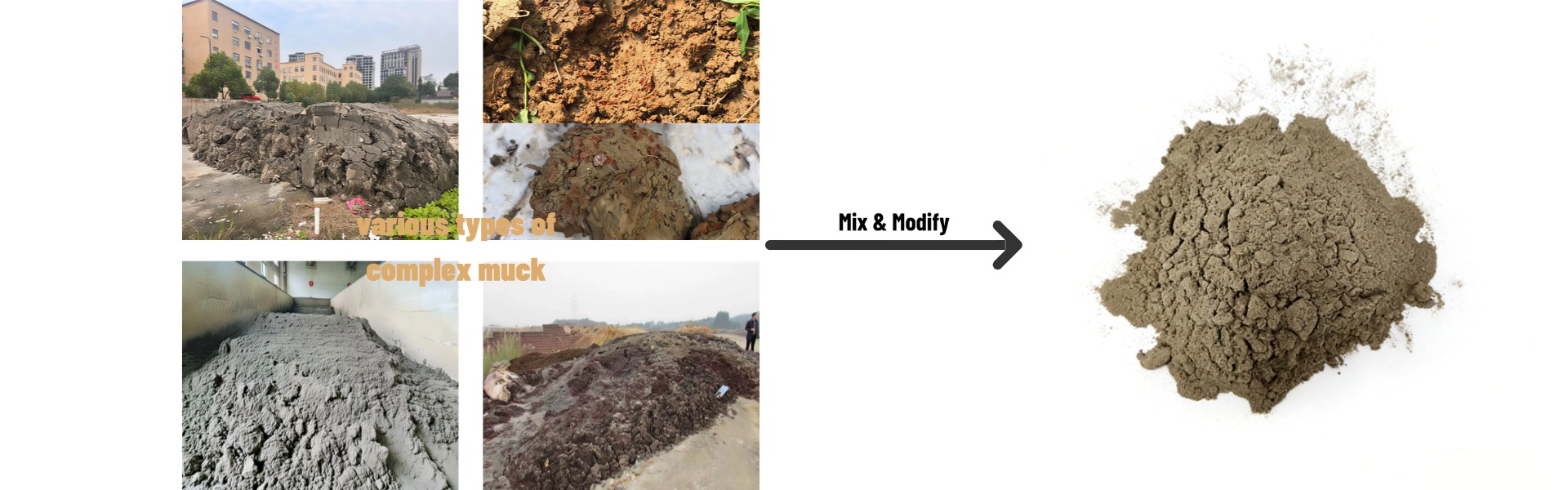
2. Screening and Crushing
The dehydrated stabilized soil undergoes screening. Once sorted, it is conveyed to a crusher via a conveyor belt, where soil stabilization equipment crushes lumps into particles no larger than 15 mm, meeting the designed particle size requirements for stabilized soil.
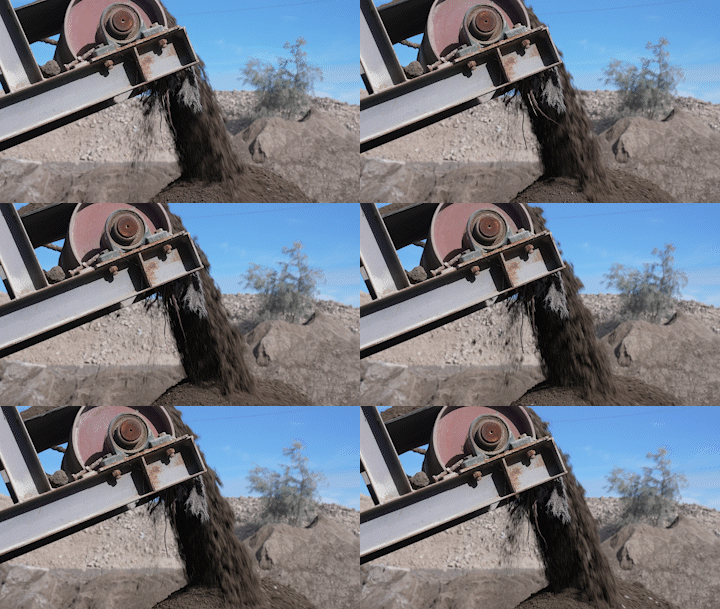
3. Uniform Mixing
The crushed soil is transported to mixing equipment via a conveyor belt, where soil remediation equipment ensures uniform blending with stabilizing materials. Curing agents are delivered through pressure pipes by a background feeding system, and spirally distributed cutters in the device perform three-dimensional cutting and rotation to evenly mix the soil and agents. Real-time control over curing agent dosage and proportions ensures the production of high-quality stabilized soil filler.
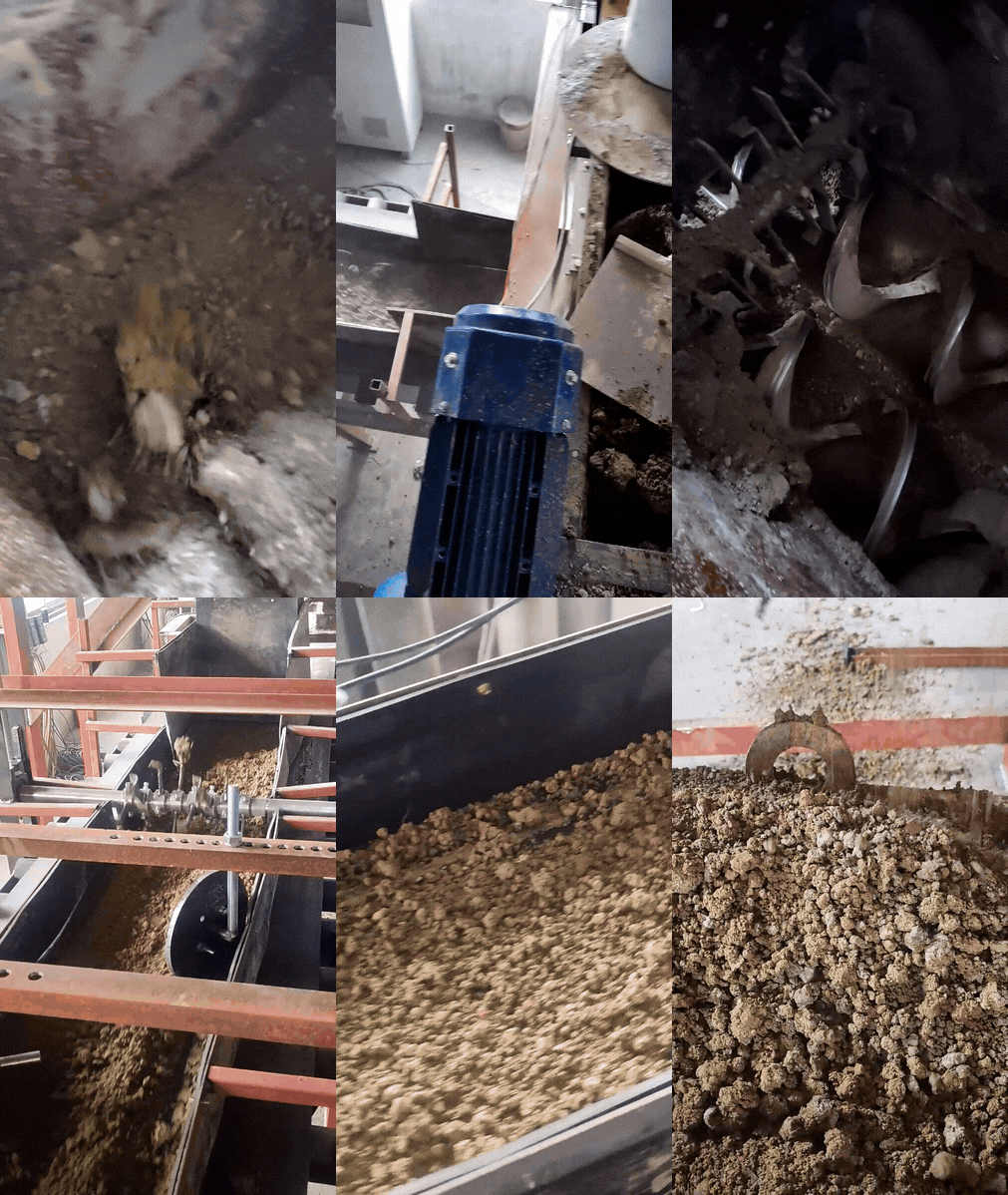
4. On-site Filling
Based on site conditions, stabilized soil that reaches optimal moisture content is used for subgrade filling and compaction. The construction follows the dddhhhthree stages, five zones, eight processesdddhhh parallel flow method, with soil stabilization equipment supporting key steps: subgrade clearing and pre-filling compaction → surveying and staking → on-site addition of dehydrating materials → crushing → mixing (with stabilizing materials) → transportation → spreading → compaction → curing → inspection.
